France · Region guide
Villas in Provence
Inland from the celebrated Riviera, a landscape of olive groves, lavender fields and cypress-lined lanes unfolds. This is the Provence of hill towns and market days, of long lunches and cicada song. It’s a region that rewards slow travel, suiting those who appreciate rustic simplicity, seasonal food and the quiet satisfaction of a morning spent exploring a local brocante. A place to settle in and live well.
About Provence
Provence is a region of quiet rhythm and sensory detail. It’s the scent of wild thyme on a warm afternoon, the clink of pétanque balls in a village square, and the pastel shades of shutters on a stone facade. This is a land shaped by agriculture and artisans, where life is lived close to the seasons. The pace is unhurried, with days structured around visits to the morning market or a simple lunch that extends for hours.
It appeals to travellers who find luxury in authenticity rather than glamour. It’s a place for independent explorers who prefer discovering a family-run vineyard to following a crowd. It will suit multi-generational families seeking a private base, couples looking for rustic romance, and anyone who wants to disconnect from the rush of modern life and reconnect with simpler pleasures. The landscape invites you to be still: to read by the pool, to paint, or simply to watch the light change over the Luberon valley.
When to visit
Spring (April-May) is mild and fresh, with almond blossom and fewer visitors. Most restaurants and sights are open after Easter. June sees warmer temperatures and the beginning of the lavender season in the Luberon and Valensole Plateau, which peaks in early July. Summer (July-August) is hot, dry and busy, especially in the most popular towns like Gordes and Roussillon; book everything far in advance.
September is often considered an ideal month. The weather is still warm enough for swimming, the summer crowds have departed, and the grape harvest (la vendange) gets underway. From October, the evenings turn cooler and the mistral wind can be bracing. Many seasonal businesses and restaurants close from November until Easter. Winter (December-March) is quiet and can be cold, but it offers a peaceful, local experience, with crisp, bright days and truffle markets in full swing.
Beaches, nature and highlights
While inland Provence is not defined by its coastline, the dramatic limestone cliffs and clear waters of the Calanques National Park, between Marseille and Cassis, are a major draw. For sandy stretches, the Plage de l'Almanarre near Hyères is known for its length and natural setting. The wild, marshy landscapes of the Camargue Regional Natural Park offer a different kind of coastal experience, known for its birdlife, bulls and white horses.
Inland, the Luberon Regional Natural Park is quintessential Provence, encompassing ochre-hued villages like Roussillon, and the hilltop towns of Gordes and Ménerbes. For a memorable drive, the D22 from Gordes to Lourmarin winds through the heart of the valley. Further east, the Verdon Gorge offers spectacular views and opportunities for kayaking on the turquoise river. A visit to the Sénanque Abbey, surrounded by lavender fields in summer, is a classic regional sight, while the Roman ruins in Vaison-la-Romaine provide a clear window into the area’s deep history.
Food and drink
Provençal cooking is based on seasonal, sun-ripened vegetables, olive oil and herbs. The daily market is the heart of the local food culture, with stalls piled high with tomatoes, courgettes, and peppers. Look for local goat’s cheese (chèvre), Cavaillon melons in summer, and pungent black truffles (rabasse) in winter. Key dishes to try include ratatouille, a simple vegetable stew; tapenade, an olive and caper spread; and daube, a slow-cooked beef and wine stew. Aïoli, a powerful garlic mayonnaise, is a dish in its own right, traditionally served with salt cod and boiled vegetables.
The region's rosé wine is its most famous export, with the Côtes de Provence and Coteaux d'Aix-en-Provence appellations being the most recognised. Many vineyards (domaines) are open for tastings. For a classic aperitif, try a glass of pastis, an anise-flavoured spirit, diluted with chilled water. For an authentic taste of local life, seek out a 'Ferme Auberge' – a working farm that serves meals made from its own produce, offering a true field-to-fork experience directly at the source.
Getting there and around
The main international gateway to the region is Marseille Provence Airport (MRS), located approximately 30-60 minutes' drive from Aix-en-Provence and the Luberon. Avignon-Provence Airport (AVN) is a smaller option, well-placed for the northern part of the region, while Nice Côte d'Azur Airport (NCE) is further east, around a two-hour drive from the heart of Provence. High-speed TGV trains also connect Paris to Avignon and Aix-en-Provence in under three hours.
A car is essential for exploring Provence. Public transport between the villages is infrequent and often non-existent, and a private vehicle is necessary for reaching markets, vineyards, and more remote sights. Driving allows you to explore the scenic country lanes and discover hidden corners of the region at your own pace. Be aware that village centres often have narrow, winding streets, so a smaller hire car can be a practical choice. Most villas are located in rural or semi-rural settings where a car is the only means of access.
Frequently asked questions
What is the best time to visit Provence?
September is often ideal, with warm weather, fewer crowds and the grape harvest. For lavender, visit from mid-June to mid-July.
Do I need to hire a car in Provence?
Yes, a car is essential for exploring the villages, markets and countryside, as public transport is very limited.
Is Provence suitable for a family holiday?
Yes, its rustic setting and range of activities like kayaking, cycling and exploring ancient sites appeal to all ages. A private villa provides a convenient base.
What are some good day trips from the Luberon?
Consider visiting the papal city of Avignon, the Roman ruins in Arles, or the university town of Aix-en-Provence, all reachable within a 1-2 hour drive.
Do people speak English in Provence?
In hotels and larger towns you will find English speakers, but in smaller villages and markets, basic French phrases are very much appreciated.
What is the local food speciality?
The region is known for its vegetable-rich dishes like ratatouille, olive-based tapenade and the famous garlic mayonnaise, aïoli.
Cities & villages in Provence
3 villas in Provence
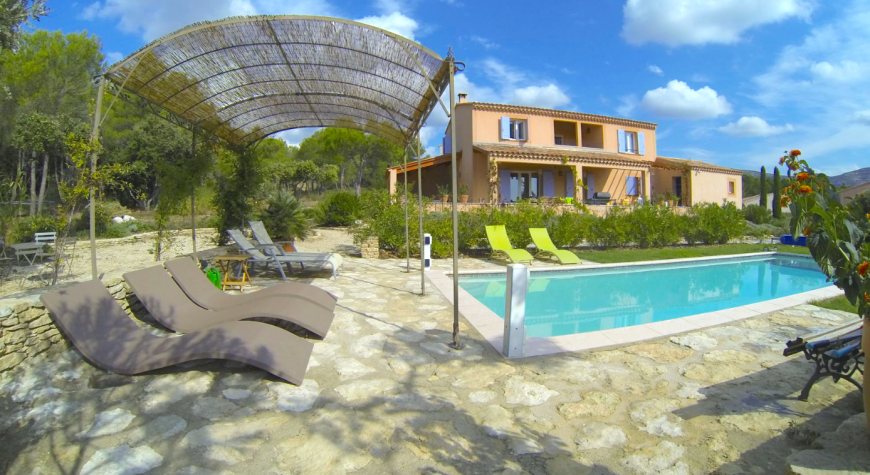
VILLA VAUCLUSE
Villa Vaucluse The villa is located in one of the most beautiful places of the domain Les Demeures du Luc. In a beautiful private garden of 6000m2 full of la…
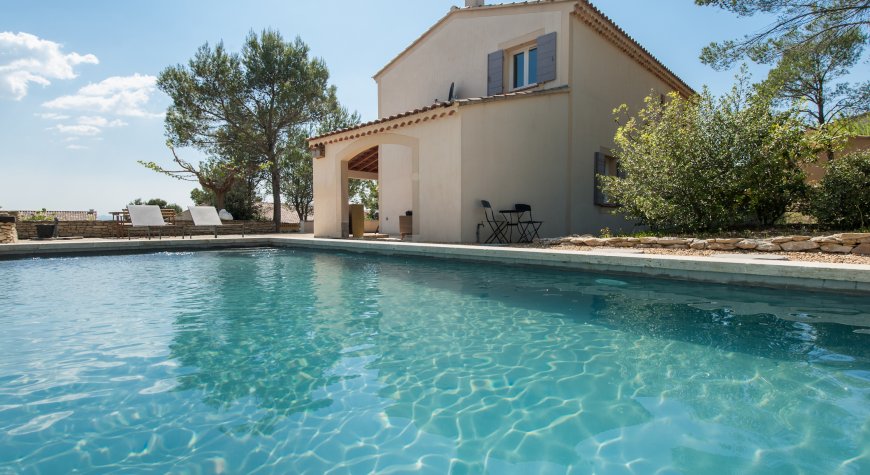
VILLA LA COQUILLE | PROVENCE WITH PRIVATE POOL
VILLA LA COQUILLE Enjoy a relaxing stay at Les Demeures du Luc, a charming holiday home set in peaceful, leafy surroundings. The villa is situated at the hig…
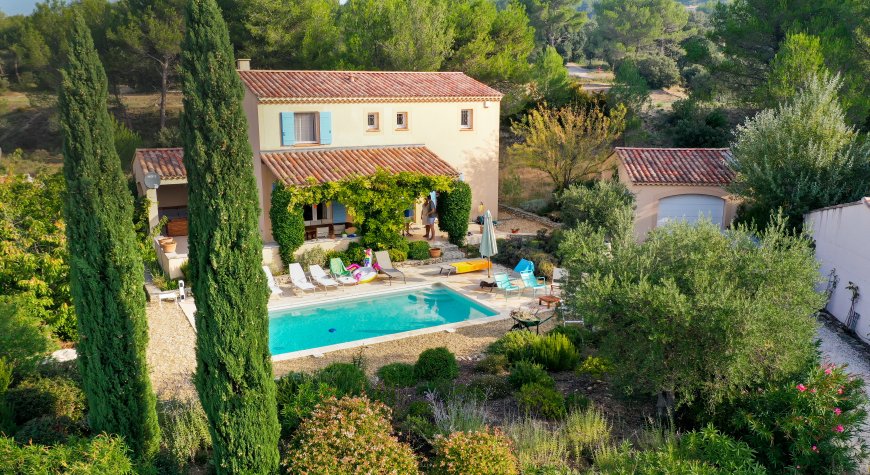
VILLA SAUMANE
Villa Saumane Cozy holiday villa with fantastic views of the Vaucluse, the Lubéron and the Alpilles, built in 2008. The large city of Avignon is approximatel…
Popular themes in Provence
Browse hand-picked themed villa collections in Provence, France.
Private pool villas in Provence
3 villas
Family-friendly villas in Provence
3 villas
Airport within 100 km villas in Provence
3 villas
Restaurants/bars within 5 km villas in Provence
3 villas
Supermarket within 5 km villas in Provence
3 villas
Village/town within 10 km villas in Provence
3 villas
Air-conditioning villas in Provence
3 villas
Pet-friendly villas in Provence
2 villas